
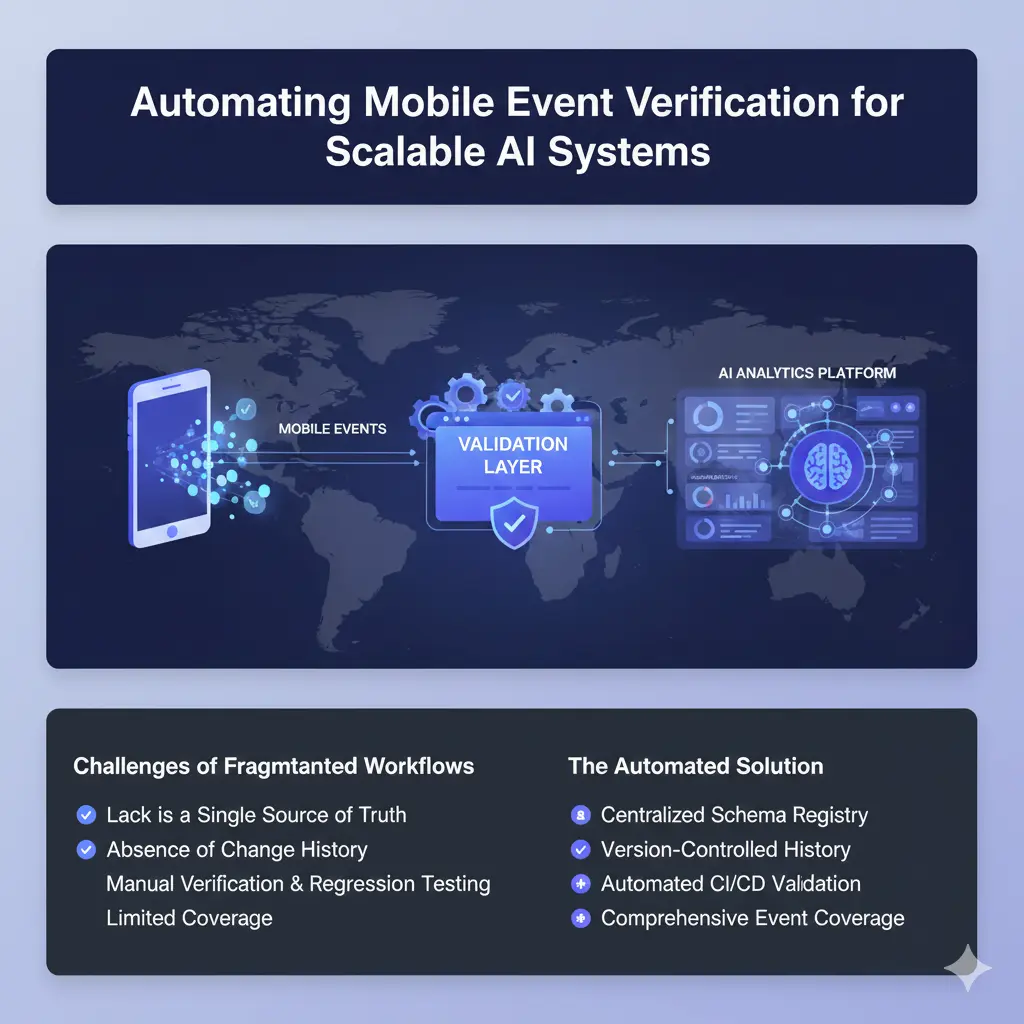
Automated mobile event verification is now essential for modern AI-driven applications. As mobile apps grow more complex, teams must ensure that analytics events remain accurate and consistent. Without proper validation, however, even small tracking errors can impact AI models, dashboards, and product decisions.
At FyndMyAI, therefore, we analyze engineering practices like these to help builders design scalable and reliable AI systems.
As mobile applications grow more complex, ensuring accurate event tracking has become a critical challenge. From user interactions to conversion metrics, mobile analytics events power decision-making across product, growth, and AI systems.
However, in practice, manual event verification does not scale. As a result, modern engineering teams are now turning to automation, AI-driven validation, and smarter data pipelines to ensure event accuracy at scale.
In this article, we explore how automated mobile event verification works, why it matters, and what AI and data teams can learn from these approaches. At FyndMyAI, we analyze such real-world engineering practices to help teams build reliable, scalable, and intelligent systems.
In modern applications, mobile analytics events power experimentation, personalization, and AI-driven decision-making. However, when events are inaccurate, the impact spreads quickly. For example, missing events can distort conversion funnels, while incorrect payloads can mislead attribution models. As a result, AI systems begin learning from unreliable data. Because of this shift, automated mobile event verification has become a foundational requirement rather than a nice-to-have feature.
Why Mobile Event Verification Matters More Than Ever

Mobile analytics events fuel:
- Product experimentation
- Funnel optimization
- Recommendation systems
- Personalization engines
- AI and machine-learning models
However, even small tracking errors can cascade into major business decisions.
For example:
- Missing events distort conversion funnels
- Incorrect payloads break attribution models
- Schema mismatches lead to unreliable dashboards
- Data inconsistencies degrade AI model performance
As a result, verifying mobile events is no longer optional — it’s foundational.
The Limitations of Manual Event Testing
Traditionally, teams relied on manual QA processes to verify mobile events. However, this approach quickly breaks down.
Manual verification struggles because:
- Time-consuming and repetitive processes slow down release cycles
- Limited scalability makes frequent app updates difficult to validate
- Human error increases the risk of inaccurate analytics
- Complex payload structures are difficult to validate manually
- Regression issues often go undetected until production
Consequently, modern teams are increasingly adopting automated event verification frameworks.
How Automated Mobile Event Verification Works

First, teams define clear schemas for each mobile event. These schemas specify event names, required properties, and data types.
Next, automated tests simulate real user actions across the application. During these tests, events are captured and validated in real time.
Finally, validation results are integrated into CI/CD pipelines. This ensures that broken analytics never reach production environments.
Automated mobile event verification introduces structured validation into the development lifecycle.
- Event schema definition
Teams define a clear contract for each event:
- Event name
- Required properties
- Data types
- Allowed value ranges
This ensures consistency across versions and platforms.
- Automated test execution
Whenever a build is generated:
- User actions are simulated
- Events are captured automatically
- Payloads are validated against schemas
As a result, errors are caught before reaching production.
- Continuous integration with data pipelines
Event verification becomes part of:
- CI/CD workflows
- Release pipelines
- Feature flag rollouts
This creates confidence in analytics accuracy, even with rapid releases.
Why This Matters for AI & ML Systems
Accurate mobile events are training data for AI systems.
When event data is unreliable:
- Recommendation engines degrade
- Personalization becomes inaccurate
- A/B testing produces false positives
- Machine-learning models learn from noise
Consequently, automated verification protects not just analytics, but AI outcomes themselves.
At FyndMyAI, we consistently see that high-performing AI products are built on clean, validated, and trustworthy data pipelines.
Key Takeaways for Engineering & AI Teams
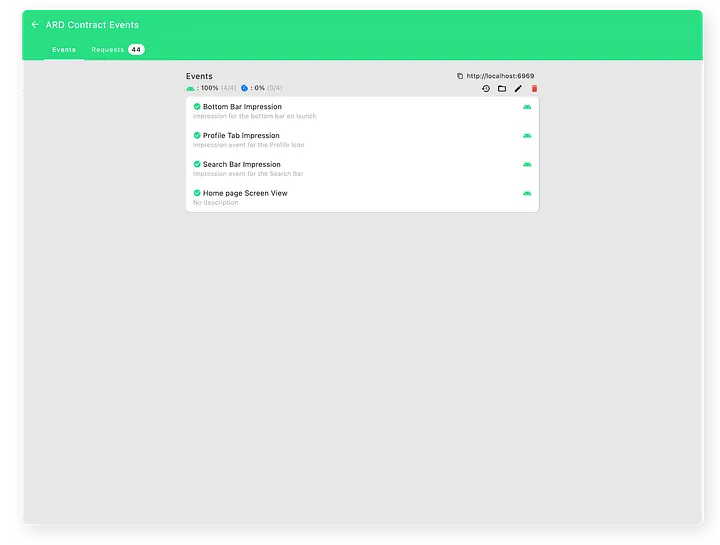
Here’s what teams can learn from automated event verification practices:
- Treat analytics as production code
Analytics deserves the same rigor as backend systems.
- Shift validation left
Catch issues during development, not after release.
- Standardize event schemas
Consistency enables scale.
- Protect AI systems at the data layer
Clean inputs lead to better models.
- Automate wherever possible
Manual processes do not scale.
How FyndMyAI Helps Teams Stay Ahead
As AI and data-driven products evolve, discoverability and learning become just as important as execution.
FyndMyAI supports this ecosystem by:
- Showcasing AI tools built on reliable data foundations
- Highlighting best practices in AI engineering and analytics
- Helping builders discover platforms that scale responsibly
- Bridging real-world engineering lessons with AI innovation
By learning from real-world systems like automated event verification pipelines, the FyndMyAI community stays informed about what truly works at scale.
Conclusion
Today, automated mobile event verification is no longer a “nice-to-have” — it’s a critical capability for modern AI-driven organizations. Ultimately, automated mobile event verification strengthens the entire analytics and AI pipeline. By validating events early, teams prevent costly downstream issues.
Moreover, automation enables faster releases without sacrificing data quality. For this reason, leading organizations treat analytics validation as production code.
In conclusion, platforms like FyndMyAI highlight these practices to help builders stay ahead in an AI-first world.
At FyndMyAI, we continue to highlight technologies and practices that shape the future of AI, data, and scalable engineering.
Large-scale platforms document similar approaches to automated mobile event verification, as explained in this detailed engineering article from Swiggy Bytes