
Lyft’s decision to redesign its iconic dashboard emblem wasn’t just a branding refresh — it sparked a major overhaul of the entire Lyft IoT system powering millions of ride experiences every day.

This transformation offers valuable lessons for AI and IoT builders, especially founders, engineers, and innovators creating intelligent, connected products. At FyndMyAI, we explore breakthroughs like this because they showcase how AI-driven platforms must evolve to meet modern demands.
In this article, we break down:
✔ Why Lyft rebuilt its IoT hardware and backend
✔ What changed in the new Lyft IoT ecosystem
✔ What AI and IoT teams can learn
✔ How FyndMyAI helps builders create smarter, scalable platforms
Why Lyft Rebuilt Its Entire IoT Platform
The original Lyft emblem — the glowing device placed on drivers’ dashboards — became a recognizable beacon for the brand. But as Lyft scaled, the system behind that emblem began to reveal limitations:
- Outdated hardware
- Inconsistent device performance
- Limited remote update capabilities
- Fragmented connectivity across cities
- Difficult maintenance at scale
To solve these problems, Lyft rebuilt both the hardware and the software foundation behind the devices — creating a more resilient and modern Lyft IoT framework.
This type of redesign is becoming increasingly common among IoT and AI-first companies. When early prototypes scale beyond expectations, technical debt becomes an obstacle. Lyft’s solution was bold but necessary: start fresh with long-term scalability in mind.
At FyndMyAI, we highlight such transformations because they show what it takes to build systems that truly scale.
Inside the New Lyft IoT Rebuild
Lyft didn’t simply redesign the physical emblem — it reimagined the full-stack IoT pipeline.
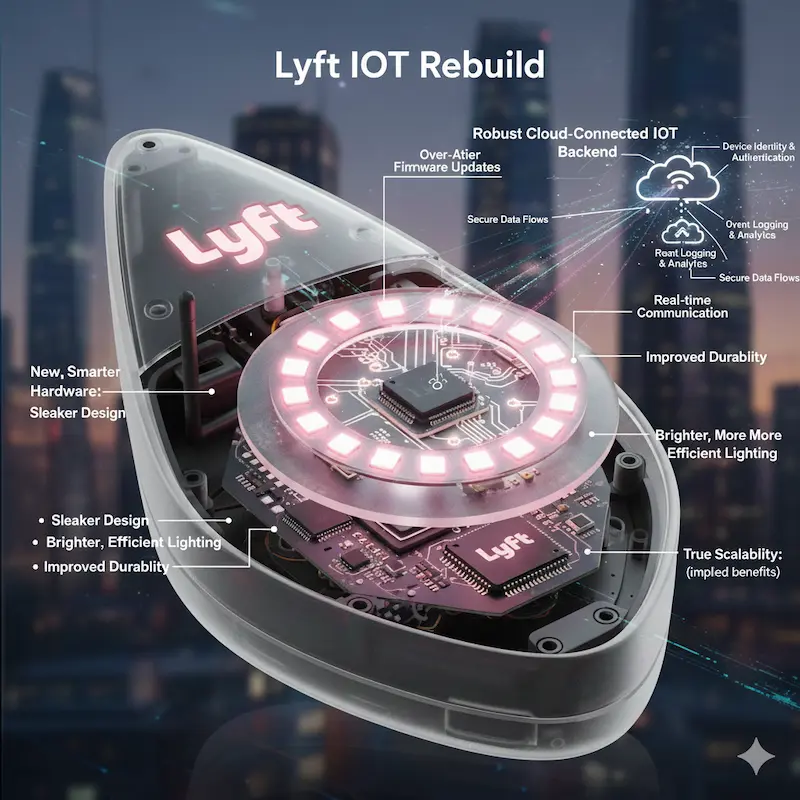
1. New, smarter hardware
The updated device offers:
- Brighter, more efficient lighting
- Better sensors
- Improved durability
- Sleeker design aligned with the Lyft brand
2. A robust cloud-connected IoT backend
Lyft rebuilt the backend to manage:
- Device identity and authentication
- Real-time communication
- Over-the-air firmware updates
- Event logging and analytics
- Secure data flows
This modern Lyft IoT architecture ensures consistent behavior across millions of deployed units.
3. True scalability
The new system supports rapid expansion, streamlined updates, and better reliability — essentials for any IoT and AI-powered environment.
What AI & IoT Product Teams Can Learn From Lyft IoT
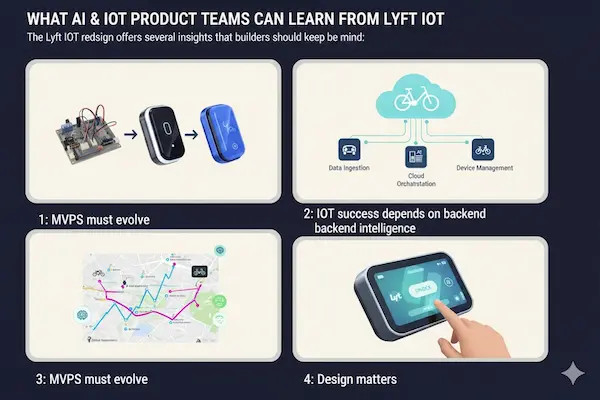
The Lyft IoT redesign offers several insights that builders should keep in mind:
1: MVPs must evolve
Early-stage hardware and AI systems often rely on quick prototypes. But long-term success requires strategic redesigns.
2: IoT success depends on backend intelligence
A device is only as smart as the infrastructure behind it.
Lyft’s IoT backend upgrade proves how essential cloud orchestration is.
3: Data and telemetry drive better AI
More insights → better optimization → better user experience.
4: Design matters
Users interact with IoT hardware daily. As a result, a beautiful, intuitive design influences trust and brand perception.
These concepts align directly with the mission of FyndMyAI — helping people discover and understand AI products that push everyday technology forward.
How FyndMyAI Fits Into the Future of AI and IoT
As AI and IoT ecosystems continue to expand, platforms like FyndMyAI help users, developers, and innovators discover cutting-edge tools, understand emerging technologies, and stay ahead of industry shifts.
Here’s how FyndMyAI contributes to this space:
1. Showcases modern AI products
Including those using IoT infrastructure similar to Lyft IoT systems.
2. Helps builders analyze trends
From system redesigns to machine-learning integrations.
3. Educates users on scalable AI-driven architecture
Just like the Lyft IoT overhaul demonstrates.
4. Bridges the gap between AI technology and real-world use
Helping businesses and creators understand where the future is headed.
By studying case studies like Lyft’s IoT transformation, the FyndMyAI community stays informed about what works, what scales, and what drives long-term success.
Conclusion
The Lyft IoT rebuild is more than a hardware makeover — it’s a masterclass in how modern companies must rethink connected systems to stay competitive.
In addition, for AI and IoT builders, the message is clear:
👉 Build with scale in mind
👉 Prioritize backend intelligence
👉 Embrace redesigns when necessary
👉 Use data to improve continuously
At FyndMyAI, we highlight innovations like this because they shape the direction of the AI-driven world. Lyft’s transformation shows that the future of IoT isn’t just about devices — importantly, it’s about smart architecture, adaptive systems, and thoughtful design.
In addition, visit the FyndMyAI blog for more breakdowns on AI, IoT, and emerging technology platforms.